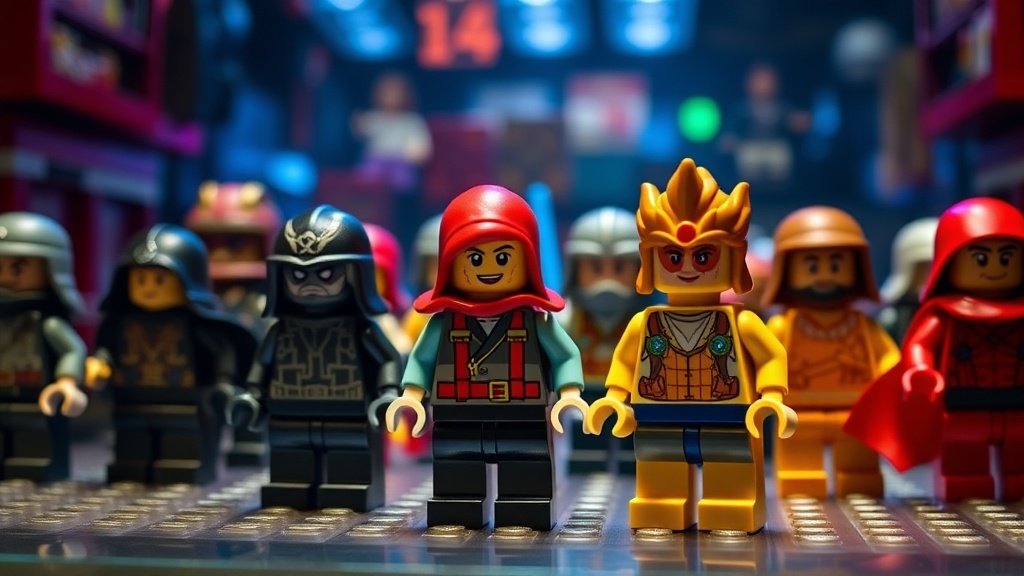
10 Most Valuable LEGO Minifigures Every Collector Dreams Of Owning

Solid Gold C-3PO (2007) - The Ultimate Star Wars Treasure
Mr. Gold Minifigure (2013) - The Legendary Series 10 Chase Figure
Shadow Trooper San Diego Comic-Con Exclusive (2010)
Solid Silver C-3PO (2007) - A Precious Metal Masterpiece
Bronze Boba Fett (2010) - The Bounty Hunter's Rarest Form
Which LEGO Minifigures Command the Highest Prices at Auction?
The most valuable LEGO minifigures regularly sell for thousands—sometimes tens of thousands—of dollars. Rare promotional pieces, limited edition comic-con exclusives, and misprinted factory errors dominate the high-end collector market. Understanding what drives these values helps any collector spot opportunities and avoid overpaying for common pieces marketed as "rare."
This guide breaks down ten minifigures that serious collectors actively hunt. You'll learn what makes each one special, current market valuations (as of 2024-2025), and what separates genuine investment-grade pieces from inflated listings. Whether you're building a collection or simply curious about the upper limits of LEGO collecting, these figures represent the absolute pinnacle of the hobby.
What Makes a LEGO Minifigure Truly Valuable?
Before diving into specific figures, let's address what actually drives value in this market. Scarcity matters most—pieces produced in runs under 1,000 units consistently outperform mass-produced sets. Condition is equally critical: unassembled figures in original polybags command 2-3x more than built examples. Provenance helps too—minifigures with documented ownership histories (especially those given directly at Comic-Con events) fetch premiums.
The catch? Many "rare" pieces aren't rare at all. Collectors frequently mistake low BrickLink availability for genuine scarcity when sellers simply haven't listed their inventory. True rarities have documented production numbers from LEGO or certified third-party authentication from services like CAS (Collectible Authentication Services).
Here's a quick comparison of value factors:
| Factor | High Impact | Low/No Impact |
|---|---|---|
| Production Run | Under 500 units | Mass retail (10,000+) |
| Distribution Method | Exclusive events, employee gifts | General retail, blind bags |
| Condition | Sealed, unassembled, original packaging | Built, displayed, no instructions |
| Authentication | CAS or LEGO-issued COA | Seller claims only |
| Character/IP | Star Wars, Marvel, original LEGO themes | Overproduced licensed properties |
How Much is the Mr. Gold Minifigure Actually Worth?
The 2013 Series 10 Mr. Gold minifigure currently trades between $3,500-$6,000 depending on condition. Only 5,000 were produced—making it simultaneously the most sought-after and most "common" figure on this list. LEGO created Mr. Gold as a chase figure (think Willy Wonka's golden ticket) hidden randomly in Series 10 Collectible Minifigures packets.
The figure itself is striking—chromed gold from head to toe with a black top hat and printed tuxedo details. Worth noting: many sellers list "Mr. Gold" figures that are actually custom chromed versions of other minifigures. Authentic pieces have specific print registration on the torso and come with a small "1/5000" numbered certificate. If the price seems too good to be true (under $2,500), it's almost certainly a fake.
Mr. Gold represents the entry point into serious minifigure collecting. It's rare enough to be impressive, documented enough to authenticate easily, and liquid enough to sell quickly when needed. Most collectors view it as the gateway piece—owning one signals you've moved beyond casual buying.
Why Does the Solid Bronze C-3PO Command Such Extreme Prices?
Only two solid bronze C-3PO minifigures exist, created by LEGO as 30th anniversary promotional items for Star Wars in 2007. One was given away in a contest; the other remains in private hands. The publicly traded example sold for approximately $10,000 in 2015—today's valuation likely exceeds $15,000-$20,000 given LEGO Star Wars market appreciation.
Unlike the far more common gold-plated C-3PO (which LEGO produced in quantities exceeding 10,000), the solid bronze version weighs noticeably more and lacks any plastic components. The bronze casting captures every detail of the standard minifigure mold but with substantial heft that feels more like a paperweight than a toy.
You'll almost never see one for sale. When they do surface, transactions happen privately between established collectors rather than public auction sites. The bronze C-3PO exists more as collector lore than an actual acquisition target—more aspirational than practical for most enthusiasts.
Comparing C-3PO Variants by Value
Not all C-3POs are created equal. Here's how the different versions stack up:
| Variant | Production Quantity | Current Value Range |
|---|---|---|
| Solid Bronze (2007) | 2 | $15,000+ |
| 14K Gold (2007) | 5 | $25,000-$30,000 |
| Chrome Gold (2007) | 10,000+ | $200-$400 |
| Standard Pearl Gold | Millions | $3-$8 |
What Is the Most Expensive LEGO Minifigure Ever Sold?
The 14-karat gold C-3PO holds the record at approximately $30,000 in a private sale. LEGO produced only five of these solid gold figures as part of the same 30th anniversary promotion as the bronze version. Four were given away through contests; the fifth remains unaccounted for in public records.
Here's the thing about gold LEGO pieces: they're essentially bullion with character. Each 14K C-3PO contains roughly half an ounce of gold—meaning the intrinsic metal value alone hovers around $1,200 depending on market rates. The remaining $28,800+ premium reflects pure collector demand and the figure's status as the ultimate LEGO Star Wars grail.
Unlike most items on this list, the gold C-3PO has never appeared on mainstream auction platforms like eBay. Sales happen through high-end collectible dealers and private collector networks. For perspective: buying one would cost roughly the same as a new Honda Civic. That said, if you have the resources and the connection, it represents the absolute peak of LEGO collecting achievement.
Are Comic-Con Exclusive Minifigures Worth the Investment?
Yes—particularly Star Wars and Marvel exclusives from 2011-2015. San Diego Comic-Con (SDCC) exclusives from this period regularly sell for $500-$2,500 depending on the character and year. The 2011 SDCC Green Lantern (based on the Ryan Reynolds film) commands $1,200-$1,800 sealed. The 2012 SDCC Spider-Woman trades similarly. Both were limited to roughly 1,000 pieces each.
LEGO distributed these through randomized drawings at their Comic-Con booth—creating natural scarcity and ensuring attendees (rather than flippers) received most pieces. The packaging matters enormously here: SDCC exclusives came in special clear display cases with event branding. Loose figures without this packaging sell for 40-60% less.
New York Comic-Con (NYCC) exclusives exist too but typically trade at lower premiums. The 2013 NYCC Spider-Man is the notable exception, reaching $800-$1,200 thanks to its unique printing and limited 500-unit run. Worth noting: LEGO stopped producing Comic-Con exclusives after 2015, making these true limited editions with no possibility of reprints.
Which Employee-Exclusive Minifigures Should Collectors Know About?
LEGO's internal awards and gifts create some of the most desirable—but least documented—rarities. The 2005 Gold C-3PO (different from the promotional versions) was given to approximately 50 LEGO employees who contributed to Star Wars licensing success. Current estimates suggest 30-40 survive, with values ranging $8,000-$12,000.
Employee Christmas gifts follow similar patterns. The 2014 "Tattooine Luke" in exclusive printing—given only to Billund headquarters staff—trades around $2,000-$3,000. The 2016 Santa Yoda employee gift (roughly 1,200 produced) is more accessible at $400-$600 but still represents serious scarcity compared to retail releases.
The challenge with employee pieces is authentication. Without original packaging or provenance documentation, sellers can struggle to prove legitimacy. That said, the small production numbers mean fakes are relatively uncommon—counterfeiters focus on higher-volume items like Mr. Gold where demand exceeds supply by wider margins.
What About Misprint and Error Minifigures?
Factory errors occupy a fascinating niche. Unlike intentional rarities, these production mistakes weren't meant to exist—making each one unique. The most valuable errors feature completely wrong parts: a Darth Vader helmet on a Stormtrooper body, or Boba Fett's print on a white torso (apparently a test print that escaped the factory).
Error values depend entirely on visual impact. Minor print misalignments might add 20-50% premiums. Dramatic color swaps or missing prints can multiply values by 10x or more. A "white Boba Fett" prototype—likely an early production test—reportedly sold for $3,000+ to specialized error collectors.
The catch? The error market is largely unregulated. Sellers sometimes create artificial errors by swapping parts between figures. Authentic errors typically show consistent aging across mismatched components; fakes often have color-mismatched plastics from different production periods. BrickLink maintains forums where experienced collectors help authenticate questionable pieces.
Do Prototype Minifigures Ever Become Available?
Prototype and test shot minifigures surface occasionally through former LEGO employees, factory contacts, or estate sales. These pre-production pieces—used for color matching, mold testing, or design approval—were never meant to leave LEGO facilities. When they do appear, collectors pay substantial premiums for the peek behind the curtain they provide.
The 2003 Cloud City prototype Boba Fett (featuring unique arm printing not used in the final set) represents the most famous example. Authentic examples trade for $3,000-$5,000. Various Batman prototypes from 2005-2008 featuring different cowl designs or unreleased color schemes command $500-$2,000 depending on uniqueness.
Prototype collecting requires extreme caution. LEGO actively discourages these sales, and provenance documentation is often thin. That said, the historical value is undeniable—owning a piece that influenced final production design offers connection to LEGO's creative process that finished products simply can't match.
How Can You Spot Fake or Inflated "Rare" Listings?
High-value minifigures attract counterfeiters and opportunistic sellers. Protect yourself by understanding common red flags. Chromed pieces (like Mr. Gold) are frequently faked using third-party chroming services—the fake versions often have thicker, uneven coatings compared to LEGO's factory finish.
Certificate numbers can be researched. For Mr. Gold specifically, collectors maintain registries of known authentic numbers. If a seller claims to have number 1234 but that number appears in another verified collection, the piece is fake. Similarly, Comic-Con exclusives should match known production quantities—any seller claiming to have "hundreds" of a 1,000-piece limited run is lying.
Finally, beware of "rare" descriptions applied to common pieces. Terms like "vintage," "hard to find," and "retired" get applied to minifigures produced in millions of units. Genuine rarity has documentation—LEGO press releases, production numbers, or established collector community consensus. If the seller's only evidence is their own claim of scarcity, keep your wallet closed.
Where Should Serious Collectors Focus Their Attention?
The minifigure market rewards specialization. Rather than chasing every "rare" listing, successful collectors focus on specific categories: Star Wars prototypes, early 2000s employee gifts, or Comic-Con exclusives from a particular era. Deep knowledge in one area prevents overpaying and helps identify undervalued pieces before the broader market catches on.
Current trends suggest increasing interest in pre-2010 Marvel and DC minifigures as collectors who grew up with those themes enter their peak earning years. Simultaneously, the adult collector market for classic LEGO themes (Pirates, Castle, Space) continues strengthening as nostalgia drives demand.
Whatever your focus, buy the best condition you can afford. In high-end collecting, mint condition pieces appreciate faster than examples with wear—and they're infinitely easier to sell when you want to upgrade or diversify. The premium you pay for perfect condition today looks like a bargain five years from now when pristine examples have disappeared from the market entirely.