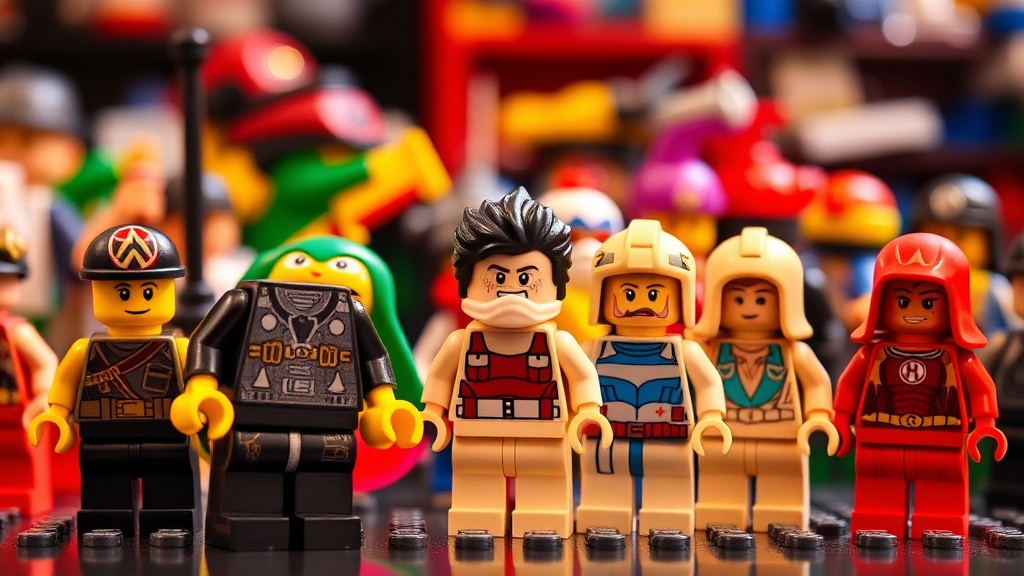
Breathing New Life into Your Collection: Reviving Well-Loved LEGO Minifigures

You just unearthed a box of old LEGO sets from the attic—a treasure trove! As you brush away the dust bunnies, you spot it: that rare, coveted minifigure you spent years searching for. But wait, its once vibrant colors are dulled, a film of grime covers its tiny face, and a tell-tale yellowing mars its classic white torso. What was once a prized possession now looks more like a relic. Don't despair. With a little patience and the right approach, many well-loved minifigures can be brought back from the brink. This guide will walk you through safe and effective methods to clean, de-yellow, and even perform minor repairs on your minifigure collection, preserving their charm and value for years to come.
What's the best way to clean dirty LEGO minifigures without causing damage?
Proper cleaning starts with understanding the material you're working with. LEGO elements, including minifigures, are primarily made from ABS plastic, which is durable but sensitive to heat and harsh chemicals. The goal is to remove dirt and oils without scratching, warping, or fading the plastic or its delicate printing.
First, always disassemble your minifigure. Separate the head, torso, arms, hands, and legs. This allows you to clean each component thoroughly and prevents water from getting trapped in joints, which can lead to issues later. For routine cleaning—dust, fingerprints, general grime—handwashing is king. The official LEGO stance on cleaning emphasizes gentleness for a reason. Here’s how you do it:
- Preparation: Fill a basin with lukewarm water. Crucially, ensure the water temperature doesn't exceed 104°F (40°C), as hotter water can warp the plastic.
- Soap: Add a very mild dish soap or detergent. Avoid anything abrasive, heavily scented, or containing strong degreasers, as these can potentially damage the plastic or leave residues.
- Cleaning: Submerge the minifigure parts. Using a soft cloth or sponge, gently wipe down each piece. For stubborn dirt in crevices, a soft-bristled toothbrush or a clean makeup brush can be remarkably effective. Exercise particular care around printed areas—faces, torsos, and leg details—to prevent accidental rubbing off.
- Rinsing: Rinse all parts thoroughly under cool, clear running water. It's vital to remove all soap residue, which can attract more dirt or leave a film.
- Drying: Lay the cleaned parts on a clean towel in a well-ventilated area, away from direct sunlight or heat sources. Air drying is the safest method. High heat from hair dryers, ovens, or direct sun exposure can cause warping, cracking, or further yellowing. Allow ample time for the parts to dry completely—sometimes 24 to 48 hours for any residual moisture trapped within studs or hollow areas to evaporate.
What about minifigures with capes, fabric elements, or stickers? These require a more delicate touch. Avoid submerging them. Instead, gently wipe fabric pieces with a lightly dampened cloth, and carefully clean around stickers, ensuring they don't peel or lift. If a sticker is peeling, consider if cleaning that area is worth the risk, or perhaps gently press it back down once the surrounding area is clean and dry.
Can yellowed LEGO minifigures be restored to their original color?
That disheartening yellow tinge on white, light gray, or blue LEGO parts is a common problem, especially with older pieces. It's not dirt; it's a chemical reaction—specifically, the bromine in the ABS plastic reacting with UV light and oxygen, causing oxidation. Fortunately, a process known as "Retrobrighting" can often reverse this, bringing those yellowed parts back to their original hue.
Retrobrighting involves using hydrogen peroxide and UV light. It's an effective method, but it demands caution and precise execution, particularly with minifigures due to their intricate printing and smaller size.
The Retrobrighting Process:
- Initial Cleaning: Start by thoroughly cleaning your minifigure parts as described above. Any surface dirt or oils can interfere with the retrobrighting process. Ensure they are completely dry.
- Disassembly: Again, separate all minifigure components. This ensures the solution reaches every surface evenly and prevents potential damage to joints or hidden areas.
- Hydrogen Peroxide Solution: The standard 3% hydrogen peroxide solution, readily available at pharmacies, works best. Avoid stronger concentrations unless you're experienced, as they increase the risk of damage.
- Setup: Place the yellowed parts in a clear glass or plastic container. Pour enough hydrogen peroxide to completely submerge all pieces. Since LEGO parts float, you might need to use a clear lid or a heavy transparent object to keep them fully immersed.
- UV Exposure: Position the container in direct sunlight. The UV rays activate the hydrogen peroxide, initiating the chemical reaction that reverses the yellowing. If direct sunlight isn't feasible, a UV lamp or LED strip can work, though it may take longer.
- Monitor Closely: This is not a "set it and forget it" process. Check your minifigure parts every hour. The duration can vary widely, from as little as 3-6 hours for mild yellowing to 12-16 hours for severe cases. Gently stir or flip the pieces periodically to ensure even exposure and prevent streaking.
- Rinsing and Drying: Once the desired color is restored, immediately remove the parts from the solution. Rinse them meticulously under cool water, perhaps with a tiny drop of mild dish soap, to neutralize any remaining peroxide. Air dry completely on a clean towel, away from direct heat or sunlight.
Important Retrobrighting Warnings for Minifigures:
- Metallic Prints are Vulnerable: Never retrobright parts with gold, silver, or chrome printing. The peroxide will almost certainly strip or dull these metallic finishes.
- Color Fading: Some vibrant colors, like bright orange or lime green, can be prone to fading or subtle color shifts if left in the solution for too long.
- Standard Prints are Generally Safe: Most standard facial expressions and torso designs (black, red, blue ink) are quite resilient and typically unaffected by the process.
- Brittleness Risk: Over-exposure to UV light and hydrogen peroxide can make older plastic brittle. Stop the process as soon as the yellowing disappears. It’s always better to err on the side of caution.
- Transparent Parts: Clear or "trans-color" LEGO elements can sometimes become cloudy if soaked for too long.
For those hesitant about chemicals, a "sun-only" method exists: simply place the dry, yellowed minifigure parts in a sunny window for several days. This is far slower and less effective for deep yellowing, but it poses virtually no risk of chemical damage to prints.
Where can you find replacement parts or fix common minifigure damage?
Even with the best care, accidents happen, and older minifigures can show wear beyond surface grime or yellowing. Cracked torsos, loose limbs, or snapped accessories are not uncommon. While major structural damage might mean replacing a part, many minor issues can be addressed.
Addressing Common Minifigure Ailments:
- Cracked Torsos: Side cracks on torsos are frequent, often from the stress of attaching legs or arms. For these, a tiny application of polystyrene cement (model airplane glue) can work wonders. This type of glue melts the ABS plastic slightly, effectively "welding" the crack together. Apply a minuscule amount with a toothpick inside the crack, then gently clamp the torso with a clothespin for 24 hours. Be extremely sparing—too much can damage the exterior. Super glue (CA glue) can also work, but use a non-blooming variety in a well-ventilated area to avoid the white residue that often appears.
- Loose Arms or Legs: If limbs swing freely, a thin layer of clear nail polish applied to the "peg" of the arm or the "hip" of the leg can restore friction. Apply it, let it dry completely (several hours), then reassemble. A microscopic shred of tissue paper tucked into the torso's armhole before inserting the arm can also provide instant tension.
- Broken Hands or Arms: A snapped hand at the wrist, or an arm that breaks at the shoulder joint, is frustrating. Removing a stuck wrist peg from an arm often requires a pin vise (a tiny hand drill) to extract it safely. For a broken arm itself, repair is difficult due to the small, high-stress area. Often, replacing the arm is the most durable solution.
- Broken Neck Studs: This is perhaps the trickiest repair. The neck stud is a high-stress point, and glue alone rarely holds. For extreme situations, one might drill tiny holes into both the torso and the broken stud, then insert a small piece of a paperclip with super glue to "pin" them together. However, a full torso replacement is usually the only permanent fix here.
For replacement parts, don't forget the official source. LEGO Customer Service has a