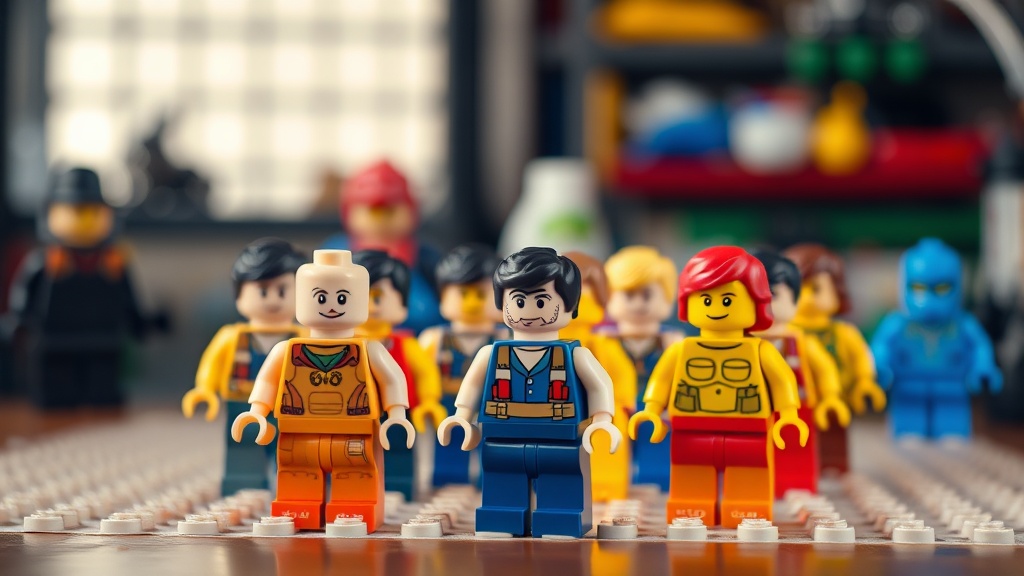
How to Clean and Restore Discolored LEGO Minifigures Without Damage

Why Do White LEGO Minifigures Turn Yellow Over Time?
Here's something that'll make you look at your childhood collection differently — the white plastic in LEGO minifigures manufactured before the mid-2000s contains a flame retardant called decabromodiphenyl ether (say that three times fast), which reacts with oxygen and UV light to create that dreaded yellow tint. It's not dirt. It's not grime. It's chemistry — and it affects millions of vintage minifigures sitting in attics, basements, and display cases worldwide.
This yellowing (collectors call it "brick yellowing" or "ABS degradation") happens because LEGO used acrylonitrile butadiene styrene — that's ABS plastic — with specific additive packages designed to meet fire safety standards. The bromine-based flame retardants were great at preventing your childhood castle from becoming a fire hazard, but they had a side effect. When exposed to light and air over decades, those chemicals break down and release bromine, which then discolors the plastic from within. You can't scrub this away with soap. You can't wipe it off. The discoloration is structural — baked into the polymer chains themselves.
But here's the good news: there's a chemical process called "retrobright" that can reverse this yellowing. It sounds like science fiction, but it's backed by actual polymer chemistry. The method uses hydrogen peroxide and UV light to break down the bromine compounds and restore the original white color. However — and this is a big however — done wrong, it can damage your minifigures permanently. Brittle plastic, faded printing, and even melted parts are risks you face if you rush the process or use the wrong concentrations.
What's the Safest Way to Clean Dusty Minifigures?
Before you even think about chemical restoration, let's talk about basic cleaning — because most "damaged" minifigures are just dusty. And I mean really dusty. That fine layer of gray film that accumulates on displayed figures isn't just unsightly — it's abrasive. Dust particles are microscopic bits of rock, fiber, and skin (yes, really) that can scratch printed details over time if you wipe them dry.
Start with dry removal. A soft makeup brush — the kind with synthetic bristles, not natural hair — is your best friend here. Gently sweep away loose dust from crevices: the neck cavity, between the legs, under the arms. A can of compressed air works too, but keep the nozzle at least six inches away. Too close and you'll fire those dust particles like tiny sandblasters across the plastic surface.
For sticky residue or fingerprints, lukewarm water with a drop of mild dish soap is all you need. No scrubbing pads. No paper towels (they're surprisingly abrasive). Use a soft microfiber cloth — the kind you'd use on glasses — and work in gentle circular motions. Pay special attention to the stud on top of the head and the hand grips — these areas collect oils from handling and can develop a stubborn film that dulls the plastic's shine. Rinse thoroughly. Soap residue attracts more dust, defeating the entire purpose.
One collector I know swears by distilled water for the final rinse. Tap water contains minerals that can leave white spots when they dry — especially noticeable on dark-colored torsos. It's a small detail, but when you're handling figures that might be worth hundreds of dollars (yes, certain vintage Star Wars minifigures regularly sell for three figures), those small details matter.
Can You Restore Sun-Damaged or Yellowed Plastic?
Now we get to the controversial part — retrobrighting. Search any LEGO forum and you'll find heated debates about whether this process is "authentic" or somehow cheating. Here's my take: these are plastic toys. If you want them white again, you can make them white again. Just understand what you're doing.
The classic retrobright formula uses 12% hydrogen peroxide cream (the kind hairdressers use for bleaching — often called "40 volume cream developer"), a small amount of xanthan gum or arrowroot powder as a thickener, and a dash of OxyClean for good measure. You coat the yellowed parts, wrap them in clear plastic wrap to prevent drying, and leave them in direct sunlight or under UV lamps for several hours. The UV light activates the peroxide, which releases oxygen radicals that break down the bromine compounds causing the yellowing.
But — and I'm emphasizing this because I've seen ruined collections — you must remove all printed elements, chrome pieces, and rubber accessories before starting. That means separating heads from torsos, removing capes, taking off helmets, and definitely not submerging any figures with the old-style grey hands (which can turn even darker in peroxide). The process works on the ABS plastic itself, not the printing. Leave a minifigure assembled and you'll get uneven results — white torsos with yellow necks, or heads that don't match their bodies.
There's also a "submersion method" where you soak parts in concentrated hydrogen peroxide liquid rather than using cream. Some collectors prefer this for large batches, but it's riskier. The liquid can seep into hollow parts and cause internal stress cracking when it expands. If you go this route, never exceed 12% concentration, and monitor the temperature — exothermic reactions can heat the solution unexpectedly.
How long does it take? Anywhere from 4 hours to 3 days depending on the severity of yellowing and the strength of your UV source. Check every few hours. Over-retrobrighted plastic can develop a chalky, bleached appearance that's actually worse than the original yellowing. When you're satisfied with the color, rinse thoroughly and neutralize with a baking soda solution to stop the chemical reaction completely.
How Should You Dry and Store Minifigures After Cleaning?
Wet minifigures are vulnerable minifigures. Water trapped in hollow parts — the head cavity, inside the legs, between torso sections — can promote mold growth or cause metal accessories (like the old grey swords) to rust and stain the plastic. Patience here pays dividends.
Air drying is best. Lay parts on a clean towel in a single layer, not touching each other. Avoid heat sources like hairdryers or radiators — ABS plastic has a glass transition temperature around 105°C (221°F), but sustained heat above 60°C (140°F) can cause warping over time. That includes leaving them in a hot car or windowsill. Just let them sit. Rotate them occasionally to ensure all surfaces dry.
For the obsessive among us (and if you're reading a 1400-word article about cleaning plastic figures, that probably includes you), a small fan on low speed can speed up drying without adding heat. Some collectors use desiccant packets — those little silica gel packs that come with electronics — in sealed containers during storage. They absorb residual moisture and prevent the humidity swings that accelerate future yellowing.
Storage containers matter more than you'd think. Clear plastic might look nice for display, but transparent containers offer zero UV protection. If you're storing figures long-term, opaque containers in a dark closet beat display cases near windows every time. For active collections you want to display, consider UV-filtering acrylic cases — they're pricier than standard acrylic but block the specific light wavelengths that trigger yellowing. Research on polymer degradation shows that UV exposure is cumulative — even indirect sunlight adds up over years.
When Should You Leave a Minifigure Alone?
Not every yellowed figure needs restoration. Some collectors actually prefer the "vintage patina" — that slightly cream-colored look that distinguishes original 1980s and 1990s pieces from modern reproductions. In the high-end minifigure market, aggressive retrobrighting can actually reduce value. Serious buyers want to see original, untouched plastic. A perfectly white 1989 Batman figure that glows like fresh snow? Suspicious. One with slight, even yellowing? Authentic.
There's also the risk factor. Rare figures — prototype minifigures, promotional items, or limited releases — should probably stay as-is unless the yellowing is severe. The retrobright process isn't perfectly predictable. Sometimes the plastic responds beautifully. Sometimes it turns an odd pinkish hue. Sometimes the plastic becomes brittle months later, developing stress cracks that weren't visible during treatment. If you wouldn't risk it on a $200 figure, don't risk it on a figure with $200 of sentimental value either.
Common printed elements — especially the older pad-printed designs from the 1990s and early 2000s — can be damaged by prolonged exposure to peroxide. The printing might fade, flake, or develop a halo effect where the peroxide seeps under the edges of the design. Test on a common, worthless figure first. Always. There's no undo button in chemistry.
For comprehensive guidance on long-term plastic preservation, the Conservation Wiki maintained by professional conservators offers detailed technical information. And if you're curious about the specific science behind ABS yellowing, this research paper on polymer degradation provides the peer-reviewed details most collectors never dive into.
Your minifigure collection tells a story — decades of play, display, and storage leave marks that aren't defects. They're history. Clean them carefully. Restore them thoughtfully. But don't chase perfection at the expense of authenticity. Sometimes a slightly yellowed Stormtrooper is exactly what he's supposed to be.