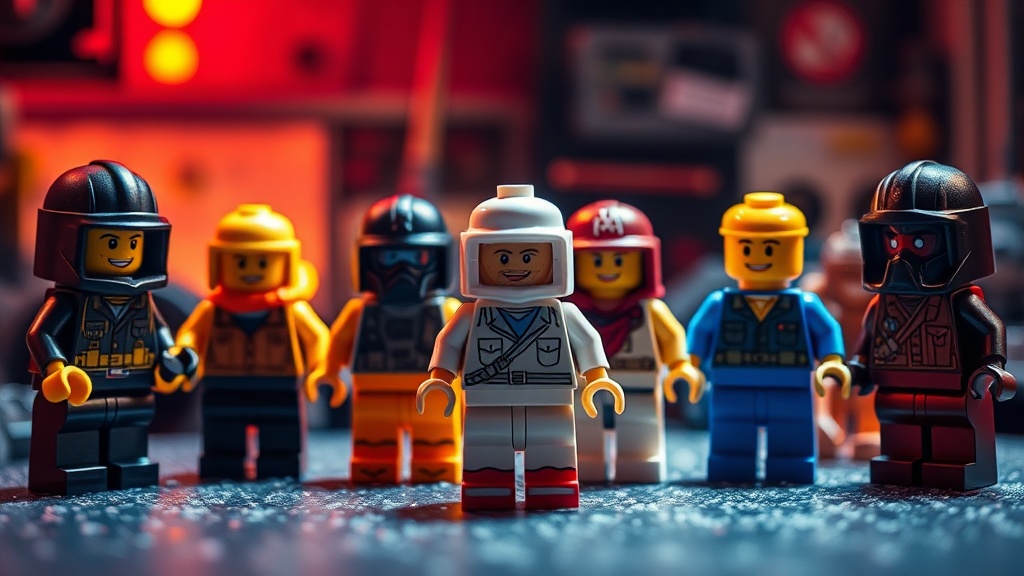
Protecting Your Minifigures from Dust and Humidity

This post provides practical strategies for protecting your LEGO minifigure collection from the twin threats of dust accumulation and humidity-induced degradation. You'll find specific advice on display cases, storage solutions, and environmental controls to keep your figures in mint condition. Maintaining a collection isn't just about aesthetics—it's about preserving long-term value.
How Can You Prevent Dust from Setting on Minifigures?
The most effective way to prevent dust buildup is to use airtight or high-quality closed display cases. Dust is composed of tiny particles—skin cells, fabric fibers, and environmental debris—that settle into the crevices of LEGO pieces, making them difficult to clean without causing damage. If you leave your figures out on an open shelf, you're essentially inviting a layer of grime to settle into the fine details of their hairpieces and printed torsos.
I've noticed that even the most expensive displays can struggle if the seal isn't tight. It's a constant battle. If you don't want to spend your weekends with a tiny paintbrush, you need a barrier.
Here are the three main ways collectors handle dust:
- Acrylic Display Boxes: These are the gold standard. They provide a clear view while keeping air movement to a minimum.
- Glass Curio Cabinets: Perfect for large-scale displays or massive collections, though they take up more room.
- Display Trays with Lids: Good for storage, but less practical for active viewing.
One thing to keep in mind: even with a "closed" case, microscopic dust can still find its way in. I often use a soft, dry brush to clear out any stray particles, but you have to be careful. Never use liquid cleaners directly on the figure—that's a recipe for ruined printing. If you need to clean a piece, use a damp (not soaking) microfiber cloth or a specialized soft-bristle brush.
If you're displaying your collection in a high-traffic area, the amount of airborne debris increases. A glass cabinet is a much better choice than an open shelf in a living room. It's a small investment that saves a massive amount of time later.
Does Humidity Damage LEGO Minifigures?
Humidity can damage certain types of LEGO products by causing material degradation or affecting the stability of certain pigments and adhesives. While the ABS plastic used in standard LEGO bricks is quite resilient, high humidity levels can lead to several issues, particularly regarding the longevity of custom-painted figures or the stability of the display environment itself.
For most standard, factory-produced minifigures, the risk is low. However, if you collect vintage pieces or custom-printed items, the stakes are higher. Moisture in the air can interact with any leftover oils from handling or even affect the way certain older plastics react to temperature shifts. It's not just about the plastic; it's about the environment the plastic lives in.
The real danger often lies in the secondary materials. If you use adhesive-based stands or certain types of custom capes, high humidity can cause the adhesives to fail or the fabric to mold. It's a subtle form of decay that's hard to spot until it's too late. I've seen display stands lose their grip because of humidity spikes in poorly controlled rooms.
To manage this, you should consider the following:
- Use Silica Gel Packets: These are cheap and effective. Place them inside your display cases or storage bins to absorb excess moisture.
- Monitor Your Environment: A simple hygrometer (a device that measures humidity) can tell you if your room is getting too damp.
- Avoid Basements: Never store your collection in a basement or an uninsulated attic. These areas have much higher fluctuations in moisture and temperature.
I personally keep a small hygrometer near my main display case. It's a cheap tool, but it gives me peace of mind. If the humidity jumps above 50-60%, I know I need to check my seals or add more desiccant.
It's also worth noting that temperature and humidity work together. A hot, humid room is a nightmare for plastic stability. If you're serious about your collection, you might want to look at the properties of polymers to understand how different environments affect plastic aging. It's a deep dive, but it helps you understand why your display matters.
What are the Best Ways to Display Minifigures Safely?
The best way to display minifigures is to use a combination of UV-protected acrylic cases and controlled indoor environments. You want to balance visibility with protection. A display that looks great but allows your figures to degrade is a failure in the long run.
When I'm looking at new display options, I look for three things: UV protection, seal quality, and ease of access. You don't want a case that is impossible to open, but you also don't want one that is basically a sieve for dust. It's a delicate balance.
| Display Type | Dust Protection | Humidity Control | Best For... |
|---|---|---|---|
| Open Shelving | Very Low | None | Casual Display |
| Acrylic Case | High | Moderate | Individual Rare Figures |
| Glass Cabinet | Very High | High (with seal) | Large Collections |
| Plastic Bins | Maximum | High | Long-term Storage |
If you've already spent a lot of time setting up your display, you might want to look at how to display your LEGO minifigures like a pro to ensure your setup is both beautiful and functional. A good display isn't just a shelf; it's a protective-environment for your investment.
One thing I've learned the hard way: don't trust "dust-proof" labels blindly. No case is truly 100% airtight unless it's specifically designed for it. If you're using a display that has many small gaps, you'll still see dust build up over a few months. It's better to expect a little bit of maintenance than to assume it'll stay perfect forever.
For those who collect highly specialized or vintage items, the stakes are even higher. The chemical composition of older plastics can be different from modern-day LEGO. You can read more about the history of these materials on the official LEGO website to see how their manufacturing standards have evolved over the decades.
When it comes to lighting, remember that heat is your enemy. Many people use bright LED strips to light up their cases, but if those LEDs generate heat, they can also raise the temperature inside the case. This can lead to "plastic fatigue" or even slight warping over a long period. Always check that your lighting is "cool" to the touch and doesn't create a greenhouse effect inside your display.
If you're dealing with a high-value collection, I'd suggest investing in a high-quality UV-filtering acrylic. It's not just about the dust; it's about preventing the colors from fading. Sunlight is a brutal force for a collector. Even indirect sunlight can cause the vibrant yellows and reds of a minifigure to dull over time. It's a slow process, but it's irreversible.
I've seen collectors lose a significant portion of their collection's value because they ignored the environment. A figure that looks "faded" or "worn" is often just a victim of poor display choices. It's much easier to prevent the damage than to try and fix it after the fact.
Ultimately, the goal is to create a stable, predictable environment. Whether you're using a small acrylic stand for a single rare figure or a massive glass cabinet for hundreds, the principles remain the same: keep it dry, keep it cool, and keep the dust out.